
The Snacking Trap: How Frequent Grazing Keeps Your Insulin Spiked and Metabolic Health Stuck

Updated: Aug 20
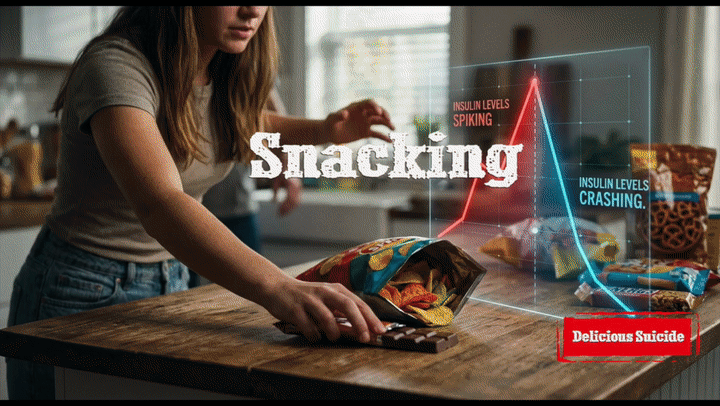
In today’s fast-paced world, snacking has been rebranded as a daily necessity. From "100-calorie bite-sized packs" to "protein-infused" cereal bars, modern food marketing has convinced us that we need to eat every two to three hours to keep our energy up, boost our metabolism, or prevent "hangry" mood swings.If you are constantly snacking throughout the day, your body never gets a break from insulin—setting off a metabolic roller coaster that can block fat burn, drive chronic fatigue, and increase long-term health risks.
1. What Happens When You Snack: The Insulin Roller Coaster
To understand why constant snacking is tough on your body, you have to look at how your pancreas and hormones respond to food.
The Insulin Switch
When you consume food—especially anything containing carbohydrates or sugars—your digestive system breaks it down into glucose. That glucose enters your bloodstream, raising your blood sugar levels. In response, your pancreas secretes insulin, a key hormone responsible for shuttling glucose out of the blood and into your cells for energy or storage.
Here is the critical catch: Insulin is an energy-storage hormone.
High Insulin = Fat Storage Mode: When insulin levels are elevated, your body prioritizes using available blood glucose and storing the excess as fat. The metabolic process of burning stored body fat (lipolysis) is essentially locked out.
Low Insulin = Fat Burning Mode: When you go hours between meals without eating, insulin levels drop, signaling your body to tap into stored fat reserves for steady energy.
The Constant Snacking Cycle
If you eat breakfast at 8:00 AM, a snack at 10:30 AM, lunch at 12:30 PM, another snack at 3:30 PM, dinner at 6:30 PM, and a late-night treat at 9:00 PM, your insulin levels remain chronically elevated for 14 to 16 hours straight.
Your body never gets a window of low insulin to access stored energy. The result?
The Glucose Spike: Blood sugar climbs rapidly after a processed snack.
The Over-Correction: Your pancreas releases a rush of insulin, driving blood sugar down quickly.
The Crash & Craving: As blood sugar plummets below baseline, your brain signals emergency hunger—demanding another quick-carbohydrate snack.
2. The Quality Myth: What You Snack On Matters
It isn't just how often you snack; it’s what you snack on. The modern food supply is dominated by ultra-processed foods designed to hit your brain's "bliss point"—the exact combination of sugar, refined carbs, unhealthy oils, and salt that triggers maximum dopamine release.
High-Carb & Refined Snacks (The Worst Offenders)
Crackers, pretzels, chips, pastries, and candy cause the sharpest glucose spikes and highest insulin surges. Because they lack fiber and solid protein, they digest within minutes, leaving you hungrier than before you ate.
The "Health Halo" Trap
Food companies excel at making junk food sound like health food. Pay attention to how these common snack categories are marketed:
"Keto" or "Low-Carb" Processed Treats: Many feature synthetic fibers, sugar alcohols, and refined seed oils that can still trigger digestive issues, gut disruption, or subtle insulin responses.
"High Protein" Snack Bars: Often contain as much sugar and refined syrups as a traditional candy bar, masked by a few extra grams of low-quality protein isolate.
"All-Natural" Fruit Snacks / Dried Fruit: Removing water concentrates the naturally occurring fructose. Without the natural bulk of whole fruit, it is easy to consume 40+ grams of sugar in seconds, leading straight to liver strain and glucose spikes.
3. How Marketing Deceives the Consumer
Snack food companies spend billions studying human psychology to keep consumers reaching into the bag. Here are the three primary marketing tricks used today:
1. Front-of-Package Distractions
Labels boast claims like "Made with Real Fruit," "Zero Trans Fat," "Gluten-Free," or "Non-GMO." None of these terms mean a food is low-sugar, low-insulin-impact, or healthy. A gummy candy made with organic cane sugar and real juice is still liquid sugar to your liver.
2. Micro-Dosing Portion Sizes
By creating "mini" packs or "100-calorie" portions, marketers remove the guilt associated with snacking. However, eating three small processed snacks throughout the afternoon keeps your insulin elevated far longer than eating one complete, balanced meal.
3. Creating "Eating Occasions"
Industry marketing created concepts like the "mid-morning boost" or "late-night munchies." By normalizing continuous grazing through media and advertising, eating has been transformed from a response to true physiological hunger into a habit driven by boredom and stress.
4. Breaking the Cycle: How to Reset Your Metabolism
Giving your digestive system and hormonal balance a rest between meals is one of the most effective ways to regain control over your appetite, energy, and body composition.
Prioritize Nutrient-Dense Meals: Build your main meals around solid protein sources, healthy fats, and high-fiber vegetables. This slows digestion and keeps you satisfied for 4 to 6 hours without needing a mid-meal fix.
Identify Emotional vs. True Hunger: Before reaching for a snack, ask yourself if you are genuinely hungry or simply bored, stressed, or thirsty. Drinking a glass of water or taking a quick walk often clears the impulse.
If You Must Snack, Choose Whole Foods: If genuine hunger hits between meals, skip the packaged snack aisle. Choose options with minimal insulin impact—such as a handful of raw nuts, hard-boiled eggs, or sliced vegetables with guacamole.
Allow Intermittent Fasting Windows: Aim for a 12-to-14-hour overnight fast (for example, finishing dinner at 7:00 PM and eating breakfast at 9:00 AM). This gives your body a sustained period of low insulin to burn fat and repair cells.


Comments